
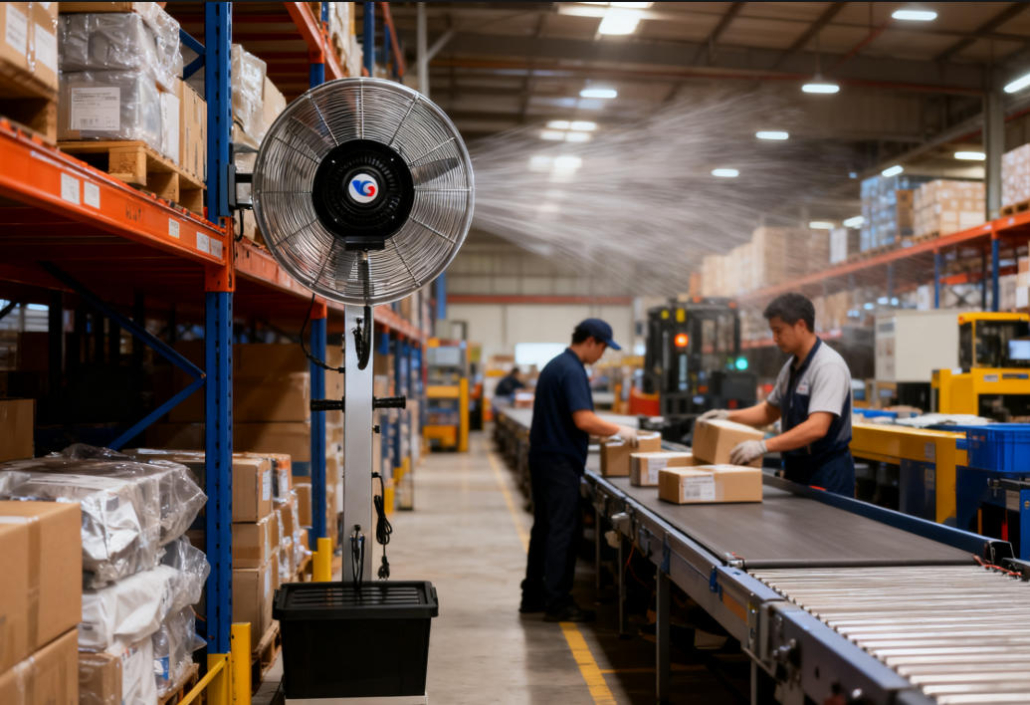
Why Industrial Fans Are Essential for Modern Manufacturing and Storage Facilities
In the changing environment of manufacturing and warehousing, it has become one of the operational priorities to maintain a productive, safe, and energy-efficient environment. Industrial fans are some of the most crucial but underestimated equipment to help achieve these objectives. These ventilation systems are not all about comfort, and they guarantee good air quality in the stables, better control of temperatures, and safeguard of valuable equipment and inventory.
The article explains why industrial fans are unavoidable in the new manufacturing plant or storage warehouse and explains their benefits, cost-saving opportunities, and the best example of how to select an appropriate system.
1. Enhanced Airflow and Temperature Regulation
A lot of heat is produced on the manufacturing floors and warehouses because of heavy machinery, lighting, and congestion in storage systems. The absence of good ventilation will lead to accumulation of heat which may be uncomfortable, straining and may be unsafe.
Industrial fans blow huge amounts of air and thermal layers are broken making the temperature even. This circulation reduces the number of hot zones in factories and makes the working conditions colder. Constant circulation of air also helps in storage rooms to stop heat build up by the ceilings where it may cause damage to temperature sensitive products or wrapping papers.
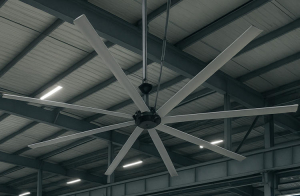
An appropriately located high-volume, low-speed (HVLS) fan can help to cool down the perceived temperature by several degrees which reduces the load on air-conditioning systems and enhances productivity and morale.
2. Protection of Equipment and Stored Goods
Air quality and humidity are important in storage warehouses particularly those that deal with electronics, food or pharmaceuticals. The bad ventilation might result in the condensation, corrosion or mold that will destroy not only the products of storage but the infrastructure itself.
The fans in industries serve the purposes of ensuring that there is a healthy circulation of air to keep the area dry and evenly balanced to avoid the accumulation of moisture and ensure the goods and metals are not ruined. They also minimize dust build-up in manufacturing areas, which might hamper the operation of the machines or lead to overheating.
These fans also prolong the life of HVAC systems since they ensure consistent airflow, and the units will not receive a lot of strain placed on them. In the long run this leads to reduced cost of maintenance and reduced system failure.
3. Energy Efficiency and Cost Savings
One of the most economical solutions to increase thermal comfort and ventilation is through industrial fans in place of expensive HVAC systems that solely use energy. An example of HVLS fans is the movement of high volumes of air at low rotation speeds which maximizes the coverage and minimizes the use of energy.
This energy efficiency will translate into cut down operational costs and cut down on the environmental impact. A lot of the installations have documented up to a 30 percent reduction in cooling expenditures following the incorporation of industrial fan systems together with their HVAC systems.
When it is colder these same fans may be used in reverse mode and help push the warm air that is gathered near the ceiling- so called destratification- and this keeps the air comfortable and requires less energy overall.
4. Employee Safety and Productivity
Ventilation has a direct impact on the health, alertness and performance of the workers. Sweating in stuffy rooms may lead to exhaustion, water loss and lack of concentration. The industrial fans reduce these risks by enhancing air circulation and stable conditions of work.
Moreover, adequate air circulation disperses air pollutants and fumes as well as dust particles produced in the manufacturing processes. This minimizes the risks on breathing and meets the workplace safety regulations.
In the end, the investment in efficient industrial ventilation systems is a means of protecting the welfare of the employees, as well as helping to achieve increased efficiency, less downtime and greater productivity in general.
5. Compliance with Industrial Safety Standards
The manufacturing and warehousing regulations usually demand enough ventilation to ensure the safety of workers and air quality. An easy but effective method of achieving these standards is through industrial fans.
They contribute to the facilities meeting the occupational safety requirements and ensuring a comfortable environment that supports the uninterrupted work by means of the constant movement of air and the absence of gases or vapors accumulation.
6. Choosing the Right Industrial Fan System
The choice of the most efficient industrial fan will be based on a number of factors that are specific to a facility. These are height of the ceiling, floor space, nature of operations and the environmental conditions in the surroundings.
Key considerations include:
Fan Size and Type: HVLS fans should be used in open spaces; the axial or centrifugal fans are more suitable in particular areas of ventilation.
Airflow Volume: Select a fan, which provides an adequate number of cubic feet per minute (CFM) output to serve your area effectively.
Installation and positioning: Tall spaces are used by ceiling fans, whereas wall mounting units are targeted to be used in specific ventilation requirements.
Noise Level: Low-RPM models are being used to ensure that there is a quiet environment in operations sensitive to noise.
Integration with HVAC: Fans that are used to supplement heating and cooling systems increase the optimization of energy.
When it comes to performance and safety in the long term, it is necessary to provide proper professional installation and regular care.
7. Implementation Best Practices
The benefit of industrial fans in manufacturing and storage warehouses can be optimized by following the following guidelines:
- Carry out site airflow audit prior to installation in order to establish stagnant areas.
- Highly favored or uneven spaces can be covered thoroughly using numerous fans.
- Combine fans and temperature and humidity automated sensors.
- Fan blades should be clean and checked every now and then in order to ensure that they are at their best.
- Revise placement of fan as the layout of the facility changes.
The correct planning of such systems can provide rapid payback in terms of reduced energy bills and increased lifespan of equipment.
Conclusion
Industrial fans are no longer an option in the modern production and warehousing environment, but they form the basis of operational efficiency, safety and sustainability. Their benefits are indisputable from maintaining constant temperature and preserving the stored products to reducing the amount of energy and enhancing the comfort of the employees.
Companies that would like to modernize their business facilities should consider investing in modern industrial ventilation systems that are long-lasting in reliability and efficiency. To have more information about the type of industrial fans, its design and uses, you may refer to TradeIndia extensive guide on Industrial Fans – a good source of information to manufacturers and warehouse managers who need professional opinion.


Leave a Reply
Want to join the discussion?Feel free to contribute!