

Industrial Fans in Food Processing: Ensuring Safety, Quality & Compliance
In the food processing industry, where product integrity, consumer safety, and stringent regulatory compliance are non-negotiable, the environment is everything. Air is not just a medium; it’s a critical control point. Stagnant air breeds condensation, humidity encourages mold, airborne contaminants threaten purity, and inconsistent temperatures compromise both product quality and worker safety. Standard ventilation often falls short. This guide explains why and how high-performance, food-grade industrial fans are indispensable engineering solutions for modern food and beverage facilities, directly impacting your most valuable assets: your product, your people, and your brand reputation.
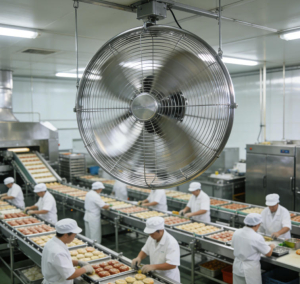
The Unique Air Quality Challenges in Food & Beverage Facilities
Food processing environments create a distinct set of atmospheric challenges that generic equipment cannot adequately address:
High Humidity & Condensation: Cooking, washing, blanching, and cooling processes saturate the air. Without constant air movement, condensation forms on ceilings, walls, and equipment, creating ideal conditions for mold, mildew, and bacterial growth (e.g., Listeria, Salmonella), while also causing slippery floors and metal corrosion.
Temperature Control & Stratification: Maintaining consistent temperatures is vital for sensitive processes (fermentation, chocolate tempering, storage) and worker comfort. Hot air naturally rises, creating a hot layer at the ceiling while leaving cooler, damp air at the floor level—a phenomenon known as stratification.
Airborne Contaminants: Dust from flour, spices, or powdered ingredients, as well as oils, vapors, and odors, can cross-contaminate different production lines, affect product taste, and settle on surfaces.
Stringent Sanitation & Compliance: Facilities must adhere to HACCP (Hazard Analysis Critical Control Point), FDA, USDA, and GMP (Good Manufacturing Practice) standards. Ventilation systems themselves must be designed for easy cleaning, resist corrosion, and not harbor pathogens.
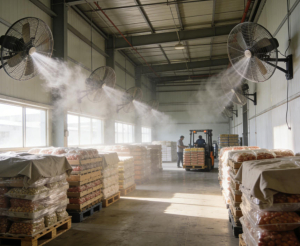
How Specialized Industrial Fans Solve Core Food Industry Problems
Purpose-built industrial fans are engineered to meet these specific demands, functioning as a key component of your food safety plan.
1.Combating Humidity and Preventing Condensation
This is the primary battle in many areas. High Volume, Low Speed (HVLS) fans are exceptionally effective.
How they work: By continuously destratifying the air, HVLS fans break up the saturated, cooler air pockets at floor level and mix them with the warmer, drier air above. This equalization raises the dew point temperature of the air contacting cold surfaces, virtually eliminating condensation on ceilings, pipes, and beams.
Result: Reduced mold risk, drier floors for enhanced safety, and protection of building infrastructure and electrical systems from water damage.
2.Enhancing Temperature Uniformity & Worker Comfort
Temperature fluctuations can spoil batches and slow down workers.
Precision Airflow: Large-diameter fans create a gentle, columnar airflow that pushes warm ceiling air down along the walls and back across the floor, creating a full-volume mixing effect. This eliminates hot and cold spots in storage coolers, processing areas, and packaging halls.
Benefit: Consistent product quality, reduced energy costs for heating/cooling systems, and a more comfortable environment that reduces worker fatigue and heat stress.
3.Controlling Airborne Particles and Maintaining Hygiene
In dry processing areas (spices, grains, powdered dairy), dust control is paramount.
Targeted Ventilation: Corrosion-resistant centrifugal fans integrated with dust collection systems capture particulates at the source. Sanitary-grade axial fans with smooth, easy-clean designs provide general airflow to prevent dust from settling on equipment and surfaces.
Benefit: Reduced cross-contamination risk, cleaner air for workers, easier facility sanitation, and lower risk of combustible dust incidents.
4.Drying & Curing Applications
For processes like drying meats, aging cheese, or curing products, controlled airflow is a process parameter.
Engineered Airflow: Industrial fans provide the consistent, high-volume airflow required to remove moisture uniformly from product surfaces, ensuring consistent quality, texture, and shelf life.
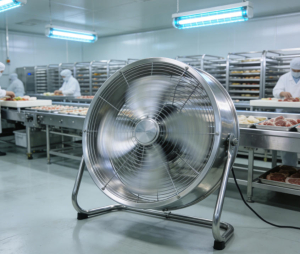
Critical Features of Food-Grade & Sanitary Industrial Fans
Not all industrial fans are suitable for food environments. Key specifications are mandatory:
Corrosion-Resistant Construction: Housing and blades made from stainless steel (304 or 316) or high-quality, coated aluminum that withstands frequent wash downs with caustic cleaners.
Sanitary Design: Totally enclosed, smooth surfaces with no cracks or crevices where moisture and bacteria can collect. Designs should comply with 3-A Sanitary Standards where applicable.
Easy-Clean Ability: Guards that are easy to remove without tools, smooth airfoils, and IP-rated motors (e.g., IP66 for protection against high-pressure water jets) for wash down areas.
Hygienic Motor Options: Motors rated for wash down environments, often with epoxy coatings or stainless steel jackets.
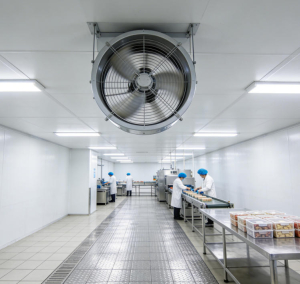
Strategic Placement for Maximum Impact in a Food Plant
Placement is as important as the fan itself. A strategic audit should identify:
- High-Moisture Zones: Above cooking kettles, blanchers, cooling tunnels, and wash-down areas.
- Critical Storage Areas: In dry storage (for temperature uniformity) and cold storage (to prevent frost buildup and hot spots).
- Personnel-Intensive Spaces: Over packing lines and assembly areas to manage comfort and airborne particles.
- Process-Specific Points: Directly in drying or curing chambers as part of the controlled environment.
A combination of HVLS fans for wide-area humidity/temperature control and smaller sanitary axial fans for targeted spot ventilation often provides the optimal solution.
The Tangible ROI: Safety, Compliance, and Product Integrity
Investing in a proper food-grade ventilation system delivers measurable returns:
Enhanced Food Safety: Proactively addresses condensation and airborne contaminants, a critical part of your HACCP plan and defense against recalls.
Regulatory Confidence: Demonstrates a commitment to GMPs by controlling the production environment, smoothing the path for audits and certifications.
Reduced Waste & Higher Yield: Consistent temperatures and humidity prevent spoilage and product loss, while efficient drying processes improve yield.
Lower Operational Costs: Reduced energy for dehumidifiers and HVAC systems, less downtime for manual condensation cleanup, and extended lifespan of building and equipment.
Conclusion: Ventilation as a Pillar of Food Safety
In food processing, air management is not a utility—it is an active ingredient in safety and quality. A well-designed industrial fan system is a strategic asset that works 24/7 to protect your products from environmental hazards, ensure compliance with the strictest standards, and create a safer, more productive workplace.
Moving beyond basic ventilation to an engineered air quality solution is a definitive step toward operational excellence and brand protection.
Need a Sanitary Ventilation Assessment for Your Facility?
Contact our food industry ventilation specialists. We’ll evaluate your specific moisture, temperature, and contamination challenges and provide a tailored plan designed to meet both your operational goals and stringent food safety requirements. Let’s build a cleaner, safer, more compliant environment together.


Leave a Reply
Want to join the discussion?Feel free to contribute!