

The Essential Guide to Industrial Fan Maintenance: Maximize Lifespan, Safety & Efficiency
Even the most advanced industrial fan is only as reliable as the maintenance it receives. While often overlooked in busy operational schedules, a proactive maintenance plan is the single most cost-effective strategy to ensure safety, sustain performance, and protect your capital investment. Neglect leads to a cascade of problems: unexpected failures, soaring energy bills, safety violations, and premature replacement costs. This definitive guide provides facility managers and maintenance teams with a clear, actionable framework to keep industrial ventilation systems running at peak performance for years to come.
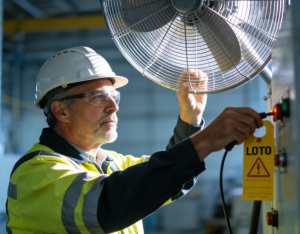
Why “Run-to-Failure” is Your Most Expensive Strategy
Waiting for a fan to break down before taking action is a plan for costly disruptions. The consequences of poor maintenance are far-reaching:
Catastrophic Failure & Downtime: A seized bearing or motor burnout can halt ventilation in a critical area, forcing production stoppages and emergency repairs.
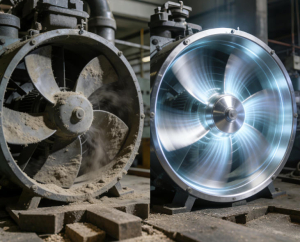
Degraded Performance & Hidden Energy Waste: Dust-clogged blades, worn belts, and misaligned components force the motor to work harder, increasing energy consumption by 15-30% while moving less air.
Increased Safety Hazards: Excessive vibration can lead to structural fatigue, component detachment, electrical faults, or fire risk in extreme cases.
Voided Warranties: Most manufacturers require documented periodic maintenance to uphold warranty coverage.
A structured maintenance program transforms your fans from a potential liability into a predictable, optimized asset.
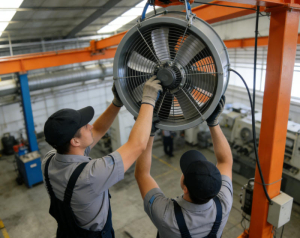
Tiered Maintenance: From Daily Checks to Professional Service
Effective maintenance follows a tiered approach, combining routine vigilance with scheduled professional intervention.
Tier 1: Operator-Based Visual & Auditory Checks (Daily/Weekly)
These are simple checks any team member can perform.
Listen: Note any new or worsening noises – grinding, clicking, humming, or unbalanced “wobbling” sounds.
Look: Check for visible dust/debris accumulation on guards, housings, and blades. Look for loose fasteners, security of wall/ceiling mounts, and any signs of corrosion or liquid ingress.
Feel: (When SAFE and powered off) Check for excessive heat from the motor housing or excessive vibration by gently touching the fan housing or stand.
Tier 2: Scheduled Preventive Maintenance (Monthly/Quarterly)
Conducted by trained maintenance personnel with the fan
LOCKED OUT AND TAGGED OUT (LOTO) .
- Deep Cleaning: Remove guards and safely clean fan blades, scroll housings, and inlet cones. Buildup imbalances the fan, causing vibration.
- Belt Inspection & Tensioning (For Belt-Driven Models): Check for cracks, glazing, or wear. Ensure proper tension according to manufacturer specs.
- Electrical Connection Check: Tighten terminal connections and inspect for signs of overheating or corrosion.
- Bearing Inspection: Check for smooth rotation and listen/feel for roughness. Lubricate per manufacturer instructions (if applicable—many modern bearings are sealed-for-life).
Tier 3: Predictive & Professional Maintenance (Annual/Bi-Annual)
This involves advanced diagnostics and should often be performed by a certified technician.
Vibration Analysis: The gold standard for bearing and alignment health. Regular readings can predict failure weeks or months in advance.
Thermographic Imaging: Identifies abnormal heat in electrical connections and motor windings, preventing electrical failures.
Motor Diagnostics: Megger testing to check insulation resistance and identify deteriorating motor windings.
Full System Performance Audit: Measures actual airflow (CFM) and static pressure to ensure the system meets original design specs.
Troubleshooting Common Industrial Fan Problems
| Symptom | Likely Cause | Immediate Action & Check |
| Excessive Vibration | 1. Imbalance from debris on blades. 2. Worn or damaged bearings. 3. Structural looseness in mounts. 4. Misalignment (direct-drive models). |
1. Clean blades thoroughly. 2. Perform bearing check/vibration analysis. 3. Tighten all mounting hardware. 4. Check coupling alignment. |
| Reduced Airflow/Performance | 1. Clogged inlet, filters, or blades. 2. Slipping or broken belt. 3. Backward wheel rotation. 4. Motor running at lower speed (voltage issue). |
1. Clean all system components. 2. Inspect/replace belt, check sheaves. 3. Confirm correct motor wiring/rotation. 4. Check supply voltage and contactor. |
| Unusual Noise | Grinding: Failing bearings. Clicking: Loose part or foreign object. Surging/Howling: System resonance or blockage. |
LOCK OUT TAG OUT. Visual inspection. Identify noise source before restarting. |
| Motor Overheating | 1. Overworked due to system blockage. 2. Incorrect voltage. 3. Failed cooling fan (on TEFC motors). 4. Insufficient ventilation around motor. |
1. Check for system restrictions. 2. Verify nameplate voltage vs. supply. 3. Ensure motor cooling fins are clean. |
When to Call a Professional: Beyond Basic Maintenance
Recognizing when a problem exceeds in-house expertise prevents minor issues from becoming major repairs.
Any major structural, electrical, or mechanical disassembly is required.
Specialized tools (dynamic balancers, laser alignment tools) are needed.
Persistent problems that reoccur after basic troubleshooting.
Performance certification is needed for regulatory or insurance purposes.
System redesign or rebalancing after a change in facility layout.
A qualified ventilation specialist brings diagnostic expertise, proper tools, and OEM parts to ensure repairs are done correctly and safely.
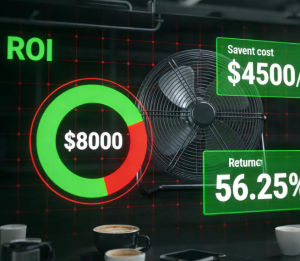
The ROI of Proactive Maintenance: An Investment in Certainty
The cost of a structured maintenance program is dwarfed by the costs it prevents:
Extends Equipment Lifespan by 30-50% , delaying major capital expenditure.
Maintains Design Efficiency , keeping energy costs at optimal levels.
Eliminates Surprise Downtime , protecting production schedules.
Ensures Continuous Safety & Compliance , avoiding audit failures.
Preserves Asset Value and warranty coverage.
Conclusion: Maintenance is the Voice of Your Equipment
Your industrial fans communicate their condition through sound, vibration, and performance. A proactive maintenance plan is the practice of listening and responding to that communication before it becomes a cry for help. By implementing a disciplined, tiered approach—from daily observations to annual professional inspections—you secure uninterrupted airflow, operational safety, and long-term financial predictability.
Don’t just wait for the breakdown. Build a plan that guarantees performance.
Unsure About Your Fan’s Health? Start with a Professional Baseline.
Schedule a Certified Ventilation System Inspection. Our technicians will provide a comprehensive health report, performance metrics, and a prioritized maintenance recommendation to secure your system’s future.


Leave a Reply
Want to join the discussion?Feel free to contribute!